American Heart Association ACLS Initial and Renewal Courses in Winter Garden, FL
Advanced Cardiovascular Life Support, built on the 2025 Guidelines and taught by a paramedic who has spent two decades running codes. We bring it on-site to your facility in Winter Garden, FL, or you train by appointment at a Central Florida training space we arrange and confirm with you when you book. There's no fixed schedule to work around, you pick the date that fits your team. You won't read from a card. You'll know your rhythms, your drugs, and your algorithms cold, and walk out certified the same day.
Anyone Can Hand You a Card. We Make You the Person Running the Code.
Here's the truth most ACLS courses won't tell you: you can pass the test, walk up to a station, read off a card, and still freeze when it's a real person on the table. That's not competence, that's a card. At Cardiac Edge, ACLS is taught by a paramedic with two decades of running codes, and the whole course is built on one rule: if you can't assess your patient, you can't fix your patient. So you'll learn to do a complete assessment, to think outside the box, to rule things in and rule them out. You'll know your rhythms, stable and unstable. You'll know your medications, or as I like to say, medicine or Edison. You'll be genuinely proficient in synchronized cardioversion and transcutaneous pacing, not just able to name them. And by the time you leave, you'll carry your official American Heart Association ACLS Provider certification and the confidence and competence to actually use it. That's the entire point. Advanced Cardiovascular Life Support (ACLS) is the American Heart Association's advanced certification for healthcare providers who manage cardiac arrest, stroke, and other cardiovascular emergencies in adults. Cardiac Edge brings AHA ACLS training to providers throughout Winter Garden, FL, taught on-site at your facility or at a Central Florida training space we arrange, with initial certifications for first-time and expired providers, renewal courses for current cardholders, and your official AHA Provider certification issued the same day you train. Healthcare hiring across Orange County, FL keeps outpacing nearly every other sector, and it's practitioners driving the demand: ER, ICU, PCU, telemetry, and step-down nurses; paramedics and flight crews; and a growing wave of outpatient providers in the region's surgery centers, cardiology practices, dental offices, and clinical programs who need a current card and the competence behind it.
Step Inside a Real Cardiac Edge ACLS Class
Most training companies tell you their classes are different. We'd rather show you ours.
This Is What Separates Us From Every Other CPR Class
Press play and watch how we actually teach — real manikins, real repetition, real explanations of the why behind every rate, ratio, and pause. A few minutes in, you'll understand why our students leave different than they arrived.
- How we break down each skill until it's muscle memory — not memorization
- Why we explain the reasoning behind every guideline, not just the steps
- What a class feels like when the goal is competence, not attendance
 Press Play — Watch How We Teach
Everything You'll Master in Your AHA ACLS Course
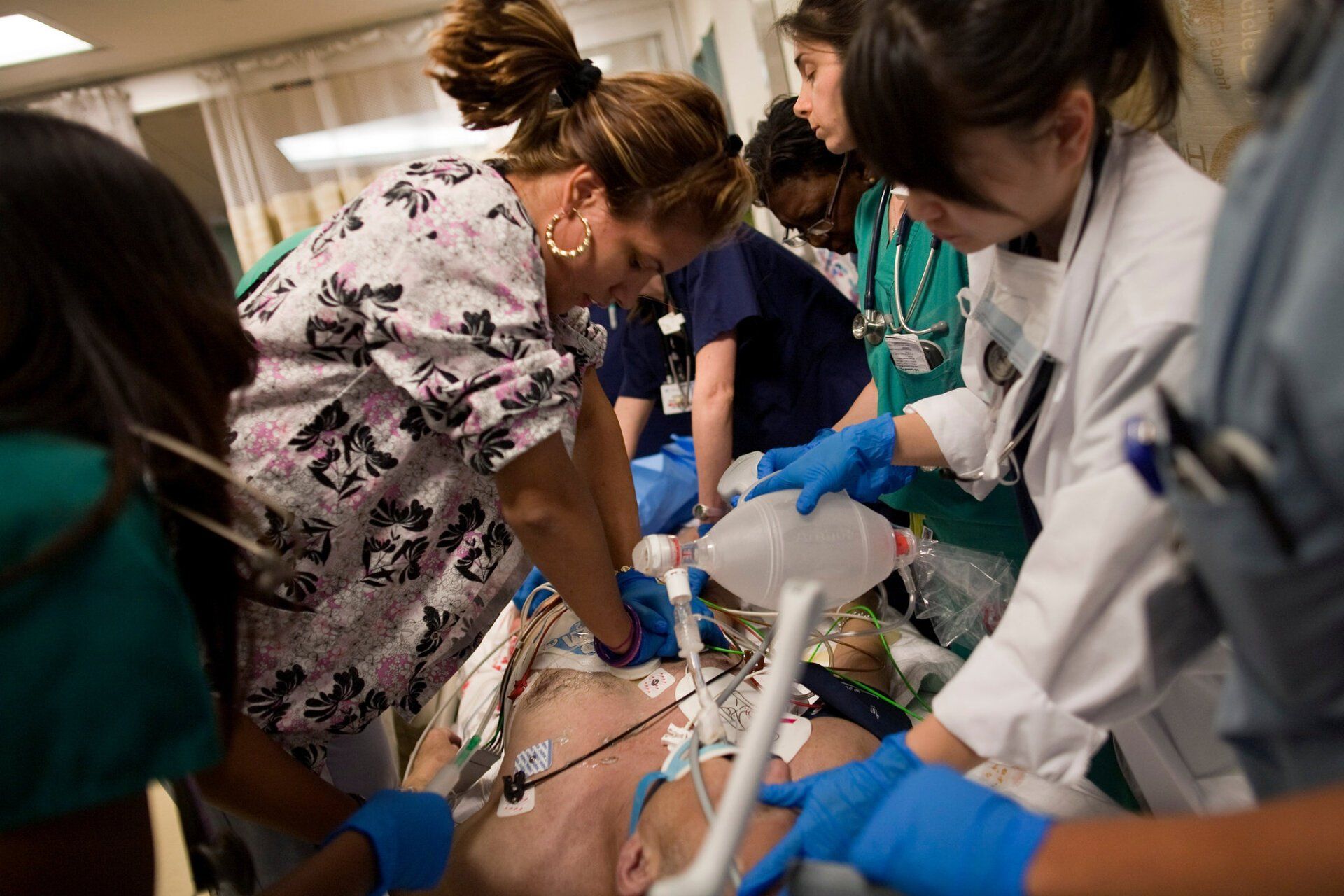
Your course covers the full American Heart Association ACLS curriculum, every topic taught the way it actually plays out in a code, until you can run it without reaching for a card. Here's exactly what you'll learn, and the thinking behind each piece. The Adult Chain of Survival and the Assessment That Drives Everything. Of course you'll learn the Adult Chain of Survival, the links that turn a collapse into a save. But here's where we go further than most courses ever do: you'll learn how to perform a complete, systematic assessment. Primary, secondary, the whole sequence, how to think outside the box, how to rule things in and then rule them out. I say it every time I teach: if you can't assess your patient, you can't fix your patient. Anyone can follow a flowchart. The provider who can actually read the patient in front of them is the one who finds the problem nobody else saw, and fixes it. Rhythm Recognition, Stable vs Unstable, Medicine or Edison. This is not the typical ACLS course where you read a rhythm off a card and walk up to a station. You will know your rhythms, what they are, what they mean, and whether your patient is stable or unstable. That one distinction drives your entire response. And you'll know your two tools cold: medicine or Edison. Medicine when there's time to treat; electricity, cardioversion or pacing, when there isn't. Once you can look at a monitor and instantly know which patient is in front of you and which tool they need, you're not following ACLS anymore. You're running it. Tachycardia, It Has to Qualify First. Here's the part that trips people up: we don't treat all tachycardia. A fast rhythm has to qualify first, and the qualifier is whether that rate is the actual cause of your patient's instability rather than just a symptom of it. Get that wrong and you treat a number instead of a patient. Get it right and you'll always know exactly when to reach for electricity and when to hold.
The Adult Chain of Survival and the Assessment That Drives Everything
Rhythm Recognition — Stable vs Unstable, Medicine or Edison
Tachycardia — It Has to Qualify First
Bradycardia — We Don't Treat a Number, We Treat a Job
AV Heart Blocks — The Three Families on the Block
Your Drugs — Triple A, Like the Towing Company

Synchronized Cardioversion and Transcutaneous Pacing — Real Proficiency
Acute Coronary Syndromes and Stroke — When Minutes Are Muscle and Brain
Airway, Ventilation, SpO2 and Capnography
Cardiac Arrest — The One Time You Do Read the Card
Reversible Causes and Using AI — Know the Reason, Know the Reversal
Post–Cardiac Arrest Care and High-Performance Team Dynamics
The Edge You'll Walk Out With
You Assess First
You Know, Not Read
Your Hands Know
You Use Every Tool
Initial vs Renewal — Which ACLS Class Do You Need?
A renewal ACLS class is for providers who hold an American Heart Association ACLS Provider certification that has not expired. An initial class is for first-time students — or anyone whose AHA ACLS certification has already lapsed. Online-only and non-AHA cards never qualify for a renewal; only a genuine, unexpired AHA ACLS card does.
Either way, the destination is the same: your official American Heart Association ACLS Provider certification, issued the same day as your class , valid for two full years — through the entire final month in which your class was taken — and verifiable by anyone at the AHA's official portal, ecards.heart.org. Initial classes run longer because we build the foundation; renewals move faster for current providers who already know their rhythms and drugs.
If your card is still current, don’t let it lapse — the $149 renewal keeps you certified across Orange County for two more years, at a price that respects what you already know.
Either path, you'll leave the same way: knowing your rhythms, your medications, and your algorithms cold — not reading them off a card.
- Initial ACLS Class $199
- ACLS Renewal Class $149
- HeartCode ACLS Skills Session $95
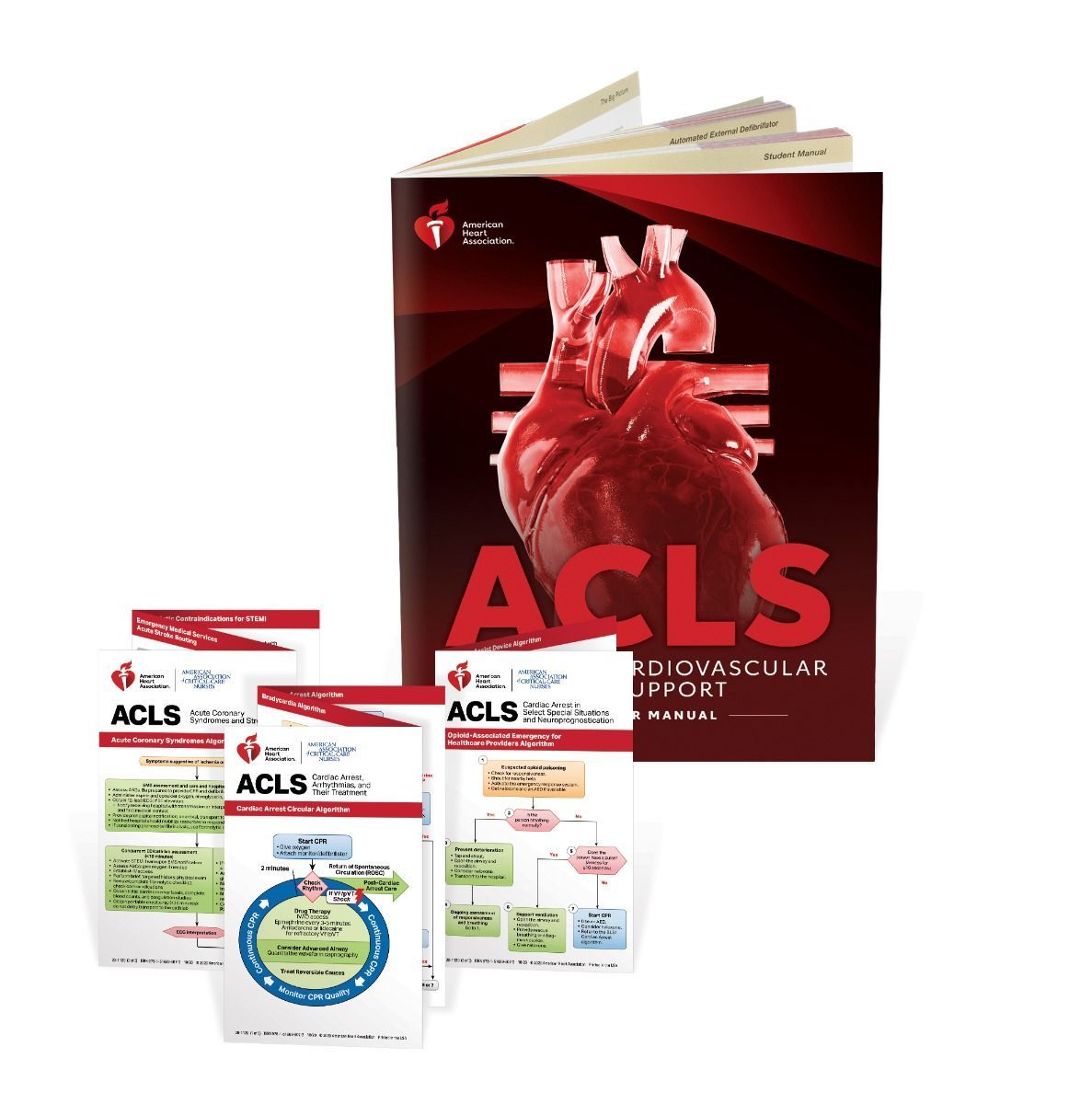
AHA ACLS Training for Winter Garden's Advanced Providers
In Winter Garden, FL, the historic charm of Plant Street now sits right beside a wave of growth, with new medical offices, urgent cares, and surgery centers opening fast along the 429 corridor in West Orange. The providers who'd actually run an ACLS algorithm here are the freestanding-ER and urgent-care physicians stabilizing patients before transport, the surgery-center and outpatient cardiac- and dialysis-clinic nurses, and the West Orange fire-rescue and EMS crews covering a footprint that grows every year. As those new practices open their doors, the people staffing them need more than a wall certificate, they need the megacode and rhythm-recognition reps that hold up when a real cardiac call comes through. We bring AHA ACLS certification to them by appointment, at the office, the urgent care, or a Central Florida training space we arrange, with pharmacology and the algorithms drilled hands-on and the card issued the same day.
American Heart Association ACLS Classes — Frequently Asked Questions
Every question we hear about American Heart Association ACLS certification in Orange County — cost, renewals, online myths, what’s covered, and where we teach — answered clearly and completely. Select a category to find what you need.
How much does an ACLS class cost at Cardiac Edge? +
An initial American Heart Association ACLS class at Cardiac Edge is $199. An ACLS renewal is $149 for providers holding a current, unexpired AHA ACLS card. Active military and returning students receive 15% off, and groups of 6 or more get 15% off. Check available dates to reserve your seat by appointment.
Do I get my ACLS certification the same day as my class? +
Yes. Your official American Heart Association ACLS Provider certification is issued the same day you complete your class — before you leave. It is verifiable immediately by any employer at the AHA’s official portal, ecards.heart.org.
Do I need a current card to take an ACLS renewal class? +
Yes. AHA renewal classes are only for providers whose American Heart Association ACLS certification has not expired. If your card has lapsed — or your certification is from another organization — you’ll take the initial class instead, and leave with the exact same official AHA ACLS Provider certification.
Can I get ACLS certified completely online? +
No. The American Heart Association does not issue ACLS certification for online-only training — hands-on skills must be demonstrated with an AHA Instructor. The straightest path in Orange County is a full instructor-led ACLS class at Cardiac Edge, with your official AHA certification issued the same day. Contact us to schedule.
How long is my ACLS certification valid? +
Your American Heart Association ACLS Provider certification is valid for two full years — and AHA cards are valid through the entire final month in which your class was taken. Book your renewal inside that window and there’s no gap in your credential.
Who should take an ACLS class? +
ACLS is built for healthcare providers who manage adult cardiovascular emergencies: ER, ICU, PCU, telemetry, cardiac, and step-down nurses; paramedics and flight crews; and the growing number of outpatient clinicians in surgery centers, cardiology practices, and free-standing emergency departments across Orange County.
Where does Cardiac Edge teach ACLS classes? +
Across the Orange County communities we serve: Ocoee, Oakland, Horizon West, Gotha, Tildenville, and Windermere. We bring the complete ACLS class to your facility, or you can reserve a session by appointment — same-day certification either way.
Is ACLS hard to pass? +
ACLS has real depth — rhythms, medications, algorithms — but it’s only hard when it’s taught as memorization. At Cardiac Edge, a 20-year street paramedic teaches you to assess first and understand the reasoning, because if you can’t assess your patient, you can’t fix your patient. Students pass because they genuinely get it.
Why does ACLS cost more than BLS? +
ACLS is an advanced certification: live instructor-led rhythm interpretation, pharmacology, synchronized cardioversion and pacing practice, and team-based code scenarios — plus your official American Heart Association certification. It’s a deeper course with more equipment, more instruction, and a bigger credential at the end.
What discounts does Cardiac Edge offer on ACLS classes? +
Two standing discounts: 15% off for active military and 15% off for returning students, applied when you register. Groups of 6 or more get 15% off — common for Orange County practices, agencies, and units booking together.
Is there a group rate for facilities or teams? +
Yes. Groups of 6 or more get 15% off, and we quote team training by group size. We can bring ACLS training directly to your facility anywhere in our Central Florida service area — or call (407) 809-7870 to set it up.
Can I get ACLS certified for free? +
Not with a genuine AHA credential. Free online “ACLS certificates” are not American Heart Association certifications — the AHA requires an authorized course with hands-on skills. If a card can’t be verified at ecards.heart.org, it isn’t an AHA card.
How much is an ACLS renewal in Orange County? +
An ACLS renewal class at Cardiac Edge is $149 — for providers with a current, unexpired AHA ACLS certification — with your renewed American Heart Association certification issued the same day, anywhere in our Orange County service area.
I need BLS too — how does that work? +
BLS and ACLS are separate American Heart Association certifications, priced separately — BLS classes run $75 initial and $65 renewal. Many Orange County providers keep both current. Call (407) 809-7870 and we’ll coordinate scheduling for both.
What does the $199 ACLS class price include? +
Everything the certification requires: your full instructor-led American Heart Association ACLS class, hands-on practice on real equipment — rhythms, medications, cardioversion, pacing, and the megacode — and your official AHA ACLS Provider certification, issued the same day and verifiable at ecards.heart.org. No surprises at the door.
Is the price the same everywhere in Orange County? +
Yes — it's $199 initial and $149 renewal, the same everywhere we serve. Team training at your facility is quoted by group size — and groups of 6 or more get 15% off. Call (407) 809-7870 for a team quote.
Will my employer reimburse my ACLS class? +
Many Orange County hospitals, EMS agencies, and practices reimburse required certifications or cover them outright — check with your education or credentialing department before you register. Your certification is issued the same day, so there’s no waiting to submit it.
Does the military discount apply to renewal classes too? +
Yes — active military receive 15% off ACLS classes at Cardiac Edge, and returning students earn the same 15% when they come back to recertify. The discount is applied when you register.
How do I register for an ACLS class? +
Request a date and we'll confirm your session directly — by appointment, scheduled around you. Prefer to talk it through first? Call (407) 809-7870.
What is the difference between an ACLS initial and an ACLS renewal class? +
An initial class ($199) is for first-time students or anyone whose AHA ACLS certification has expired — we build the full foundation. A renewal ($149) is exclusively for providers with a current, unexpired AHA ACLS card — it moves faster because you already know your rhythms and drugs. Both finish with same-day AHA certification.
My ACLS card expired last week. Can I still take the renewal? +
No — under American Heart Association rules, once your card has expired you take the initial class. The good news: the destination is identical — your official AHA ACLS Provider certification, issued the same day, valid two years.
I have an ACLS card from another organization. Can Cardiac Edge renew it? +
No. An AHA ACLS renewal requires a current American Heart Association card — certifications from other organizations don’t qualify, no matter how recent. You’d take the AHA initial class and move onto the AHA two-year cycle most Orange County employers ask for.
How often does ACLS have to be renewed? +
Every two years. Your American Heart Association ACLS certification is valid through the entire final month in which your class was taken — so a class taken any day in June is valid through the last day of June two years later.
What happens if I let my ACLS certification expire? +
You’re no longer a current ACLS provider, and many employers respond immediately — including holding you off the schedule for roles that require it. Avoid the scramble: your card is valid through its entire final month, so book your $149 renewal inside that window.
Does renewing my ACLS also renew my BLS? +
No — they are separate American Heart Association certifications with separate cards and separate two-year clocks. Cardiac Edge teaches BLS initial and renewal classes across Central Florida, so keeping both current is easy to coordinate.
When should I book my ACLS renewal? +
Any time before your card expires — remember it’s valid through the entire final month on the card. Request a date and we'll lock in your seat before it lapses.
Is the renewal class shorter than the initial class? +
Renewals are built for current providers, so the pace is faster — we sharpen rhythms, medications, and algorithms rather than build them from zero. Initial classes go deeper because we construct the full foundation. Either way, you leave the same day with your official AHA certification in hand.
Can I renew my ACLS early — do I lose time on my card? +
You can renew any time before your card expires, and your renewed American Heart Association certification runs two full years from your new class. Plenty of Orange County providers renew a month or two ahead so a busy schedule never puts their credential at risk.
My card expires at the end of this month — am I still renewal-eligible? +
Yes. American Heart Association cards are valid through the entire final month in which the class was taken, so until that month ends you qualify for the $149 renewal. Request a renewal date before it lapses — after that, it’s the initial class.
What do I need to bring to an ACLS renewal class? +
Your current, unexpired AHA ACLS card — digital is fine; it lives at ecards.heart.org — so eligibility can be verified. Beyond that, bring your working knowledge: the renewal moves fast because you already own the foundation.
How long does an ACLS renewal class take? +
Renewals run noticeably faster than initial classes because we’re sharpening, not building from zero. We'll confirm your exact start time and duration when you book — and either way, your AHA certification is issued before you leave.
Is there still a test in the renewal class? +
Yes — a renewal meets the same American Heart Association standard as an initial: hands-on skills, the megacode, and the exam. It simply moves at a current provider’s pace. Our students handle it well because the frameworks bring everything back fast.
I certified with a different AHA training site. Can I renew with Cardiac Edge? +
Yes — your American Heart Association certification is national, not tied to where you took it. As long as your AHA ACLS card is current and unexpired, you qualify for our $149 renewal class anywhere in Orange County, no matter who taught your last one. Request a date.
When do I actually receive my ACLS certification? +
At the end of your class, the same day — before you leave. There’s no waiting period and nothing mailed later. Your American Heart Association ACLS Provider certification is live and verifiable immediately.
Is the card a genuine American Heart Association certification? +
Yes — Cardiac Edge teaches official American Heart Association courses, and you receive the genuine AHA ACLS Provider certification: the same credential issued anywhere in the country, verifiable at ecards.heart.org.
How does my employer verify my ACLS certification? +
At the AHA’s official verification portal, ecards.heart.org. Any hospital, agency, or credentialing office in Orange County — or anywhere in the U.S. — can confirm your certification there in seconds.
I lost my ACLS card. How do I get it back? +
Your certification lives at ecards.heart.org — sign in with the email you used for class and you can re-access, print, or share it any time. Nothing is lost when the card itself is.
Is the AHA ACLS card accepted nationwide? +
Yes. The American Heart Association is the standard hospitals, EMS agencies, and credentialing bodies recognize across the country. Certify in Orange County and your card travels with you.
Does my card really stay valid through its entire final month? +
Yes — American Heart Association certifications are valid through the entire final month in which the class was taken, not just to a single date. That full-month window is exactly when to schedule your renewal so your credential never lapses.
Is the certification digital or paper? +
Your American Heart Association certification is issued digitally and lives at ecards.heart.org, where you can print a copy or share a verification link with any employer — whichever format your Orange County facility asks for.
What information appears on my AHA eCard? +
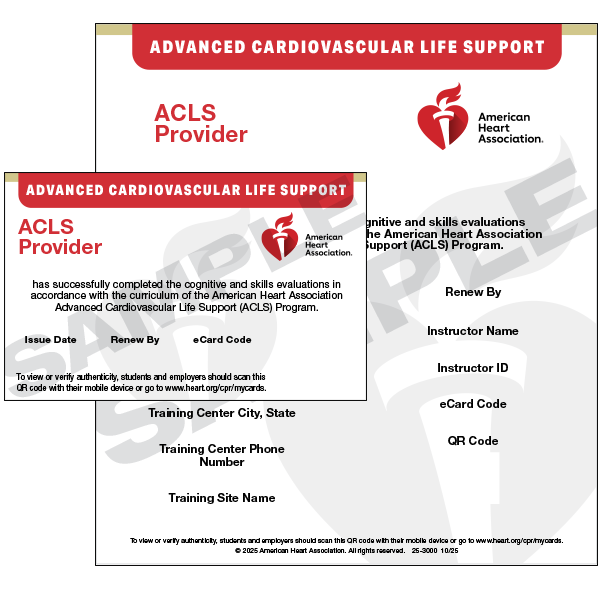
Your name, the course — ACLS Provider — your completion date, your renewal date, and the issuing American Heart Association Training Site and instructor. It’s everything a credentialing office needs, in the AHA’s own format, verifiable at ecards.heart.org.
Which email do I use to claim my eCard? +
The email you registered with for class — that’s where your eCard lands and how you sign in at ecards.heart.org. If your email changes later, the portal lets you keep access to your certification; call (407) 809-7870 if you ever get stuck.
Do you mail a physical card? +
There’s nothing to mail and nothing to wait for — your American Heart Association eCard is issued the same day as your class. If your facility wants paper, print it straight from ecards.heart.org and it’s identical to the credential every employer verifies online.
My employer asked for an “AHA ACLS Provider card.” Is that what I get? +
Exactly that. The American Heart Association ACLS Provider certification is the standard credential hospitals and agencies mean when they say “ACLS card” — and the one issued at every Cardiac Edge ACLS class in Orange County, the same day you train.
My facility uses a credentialing service. Will the card work with it? +
Yes — your AHA eCard verifies through ecards.heart.org, which credentialing services and HR systems across the country accept as the source of truth. Share the verification from the portal and you’re done.
If I certify with Cardiac Edge, can I renew somewhere else later? +
Yes — your American Heart Association certification is national, so any AHA training site in the country can renew it while it’s current. Of course, if you’re still in Orange County in two years, we’d love to be the ones who renew it.
Is an online-only ACLS certification legitimate? +
Not as an American Heart Association credential. The AHA requires hands-on skills demonstrated with an AHA Instructor — an online-only card is not an AHA certification and can’t be verified at ecards.heart.org. If your employer expects AHA, online-only won’t hold up.
What about sites offering free or instant online ACLS? +
If it’s instant and online-only, it isn’t AHA. The American Heart Association certifies through authorized training with in-person skills — that’s why employers trust it. Verify any card at ecards.heart.org before relying on it.
What is HeartCode ACLS? +
HeartCode is the American Heart Association’s blended option: you complete the cognitive portion online — roughly 6.5 to 7 hours, per the AHA — then demonstrate hands-on skills in person with an AHA Instructor before any certification is issued. For most providers, the full instructor-led classroom class is the better path — it’s where the rhythms, drugs, and algorithms are actually taught. Contact us to schedule.
Can I renew my ACLS completely online? +
No — even for renewals, the American Heart Association requires hands-on skills with an AHA Instructor. The fastest legitimate path in Orange County is our $149 renewal class — hands-on, instructor-led, with your renewed AHA certification issued the same day.
Will my employer accept an online-only ACLS card? +
Many Orange County employers specifically require American Heart Association certification — and online-only cards aren’t AHA. Before spending money on any online-only option, ask your employer; the AHA card is the one that’s never questioned.
HeartCode or the full classroom course — which should I choose? +
The full classroom course — where the rhythms, medications, and algorithms are actually taught, not just tested. HeartCode is the AHA’s self-study alternative, but the live class is where the frameworks click, the hands-on reps happen, and you walk out certified the same day with the confidence to use it.
What does the ACLS class cover? +
Recognition and management of cardiac arrest, the adult Chain of Survival, tachycardia and bradycardia, AV blocks, synchronized cardioversion and transcutaneous pacing, ACLS pharmacology, acute coronary syndromes, stroke, airway management with capnography, the H’s and T’s, post-arrest care, and high-performance team dynamics — the complete American Heart Association ACLS curriculum.
Is the class taught on the current AHA guidelines? +
Yes — every Cardiac Edge ACLS class in Orange County is built on the 2025 American Heart Association Guidelines, including current medication dosing, post-arrest temperature management, and capnography-driven CPR quality.
Will I actually learn to read the rhythms? +
That’s the heart of our class. You’ll classify every rhythm as stable or unstable — medicine or Edison — and you’ll learn AV blocks through the “three families on the block” method that makes first-degree, Mobitz, Wenckebach, and complete heart block impossible to confuse.
How are the ACLS medications taught? +
With frameworks you’ll never lose: the Triple A drugs — Adenosine, Amiodarone, Atropine — mapped to the alphabet. Narrow and fast lives at the front (A–D: Adenosine), wide and fast in the middle (E–M: Amiodarone), low and slow at the back (O–T: Atropine). You’ll know which drug, which patient, and why.
Do I practice synchronized cardioversion and pacing hands-on? +
Yes — genuine proficiency, not name recognition. You’ll set up, sync, and deliver cardioversion and run transcutaneous pacing yourself, because the unstable patient is exactly when there’s no time to learn the machine.
Does ACLS cover heart attacks and strokes? +
Yes. Acute coronary syndromes — early 12-lead acquisition and STEMI recognition — and stroke care, where time is brain: recognition, stroke screens, and getting the right patient to the right Orange County facility fast.
Is there a megacode in the class? +
Yes — team-based cardiac arrest scenarios where you lead and follow. And we teach the working-code reality the AHA itself endorses: the arrest algorithm is the one time you do read the card. Laminate it, run it, cross off what you’ve done. Calm beats memory in a code.
What airway management is included? +
Bag-valve-mask technique, airway adjuncts, advanced airway ventilation at one breath every six seconds, and waveform capnography — the number that confirms your tube, proves your compression quality, and announces ROSC with a sudden spike.
What are the H’s and T’s in ACLS? +
The H’s and T’s are the reversible causes of cardiac arrest — the list you run when a code won’t break. The H’s: hypovolemia, hypoxia, hydrogen ion (acidosis), hypokalemia or hyperkalemia, and hypothermia. The T’s: tension pneumothorax, tamponade (cardiac), toxins, and thrombosis — pulmonary or coronary. In a Cardiac Edge ACLS class you don’t just recite them — you learn to find the cause in front of you and reverse it, including using AI to pull a toxin’s antidote in real time.
Which heart rhythms will I learn to recognize? +
The full ACLS set: ventricular fibrillation and pulseless ventricular tachycardia, asystole and PEA, the stable and unstable tachycardias including SVT, the bradycardias, and every AV block — first degree, Mobitz, Wenckebach, and complete heart block. And for each one, the only question that matters: stable or unstable — medicine or Edison.
Which medications are covered in ACLS? +
The core ACLS pharmacology: epinephrine and amiodarone for cardiac arrest, adenosine for the narrow fast rhythms, atropine for symptomatic bradycardia, plus the supporting agents the algorithms call for. Taught through the Triple A alphabet framework, so the right drug surfaces on its own when the pressure is real.
Is there a written exam in the ACLS class? +
Yes — the American Heart Association ACLS exam, with a passing score of 84% or higher, plus the hands-on megacode evaluation. Our students walk in ready because the class is built on understanding, not memorization — by exam time, the answers are things you know, not things you crammed.
What is ROSC — and what happens after we get a pulse back? +
ROSC is return of spontaneous circulation — the heart restarting. It’s the beginning of the next emergency, not the end of the code: post–cardiac arrest care means oxygenation and ventilation targets, blood-pressure support, a 12-lead to find the cause, and temperature control to protect the brain you just saved. Your class covers all of it.
Do I get to practice as the team leader? +
Yes — high-performance team dynamics means you run scenarios as both a team member and the team leader: clear roles, closed-loop communication, and the calm choreography that makes a real code work. You practice both seats until either one feels natural.
Will I train on real equipment? +
Yes — real manikins, real monitors and defibrillators for synchronized cardioversion and pacing reps, bag-valve-masks and airway equipment for the ventilation work. The whole point of the class is that your hands have already done it before a real patient ever needs it.
Can a non-nurse take ACLS? +
Yes. ACLS is for healthcare providers broadly — paramedics, physicians, PAs, NPs, respiratory therapists, and other clinicians who respond to adult cardiovascular emergencies all sit in the same Cardiac Edge classes across Orange County.
Can a CNA get ACLS certified? +
Yes — and for CNAs and techs working acute care, cardiac, or step-down units in Orange County, ACLS is a genuine differentiator that shows you understand what the team is doing when a patient deteriorates.
Should nursing students take ACLS? +
If you’re aiming at ER, ICU, PCU, telemetry, or cardiac roles — yes. Many Orange County units expect ACLS at or shortly after hire, and walking into an interview already certified moves your application up the stack.
Do I need a BLS card before I can register for ACLS? +
ACLS builds on BLS-level skills, and most employers expect providers to hold both — but you don’t need to show a BLS card to register for an ACLS class at Cardiac Edge. If you need BLS too, we teach that across Orange County as well.
Do paramedics and EMTs take ACLS? +
ACLS is core to paramedic scope — it’s the adult emergency cardiovascular playbook medics run in the field. EMTs and AEMTs across Orange County take it too, often while advancing toward medic school or expanded roles.
I work outpatient — do I really need ACLS? +
Increasingly, yes. Surgery centers, cardiology practices, sedation settings, and free-standing emergency departments across Orange County are exactly where healthcare is growing — and where ACLS is becoming a hiring and credentialing expectation.
Do dental and sedation providers take ACLS? +
Commonly, yes — sedation practice frequently carries an ACLS expectation, and many Orange County sedation providers and their teams certify with us so the whole room is ready if an airway or rhythm goes wrong.
Do I need both ACLS and BLS? +
They’re separate AHA certifications, and many acute-care employers in Orange County require both. ACLS doesn’t replace BLS — check your facility’s requirements, and we can schedule both classes so your cards stay synchronized.
Do respiratory therapists take ACLS? +
Yes — RTs are code-team regulars in ICUs and emergency departments across Orange County, and the airway, ventilation, and capnography portion of ACLS sits squarely in their lane. Many facilities expect a current AHA ACLS card for acute-care respiratory roles.
Do I need a license to enroll in an ACLS class? +
No license is required to take the American Heart Association ACLS course. It’s designed for healthcare providers and those entering the field — students and new grads across Orange County take it to be ready for the roles they’re pursuing.
Do flight and critical-care transport crews train with you? +
Yes — paramedics and flight crews are exactly who this class was built by and for: it’s taught by a paramedic with two decades of running codes, and the assessment-first approach matches how transport medicine actually works. Crews across Central Florida keep their AHA cards current with us.
Do physicians, PAs, and NPs take ACLS? +
Yes — physicians, physician assistants, nurse practitioners, and CRNAs across Orange County keep current AHA ACLS cards, because hospital privileges, sedation work, and procedural settings commonly expect it. They sit in the same Cardiac Edge classes as the nurses and medics — and the assessment-first teaching lands just as hard at every level.
Is ACLS harder than BLS? +
It’s deeper — rhythms, pharmacology, and algorithms on top of BLS-level fundamentals. But difficulty is a teaching problem: when every concept has a framework and a reason behind it, the depth becomes the part students enjoy.
Is it possible to fail an ACLS class? +
Anywhere, yes — especially where ACLS is taught as a memory test. Our class is built so that doesn’t happen: you assess, you understand, you practice hands-on until the algorithms are yours. We train you to be ready, not just to pass.
How should I prepare for my ACLS class? +
Come with solid BLS-level fundamentals and a willingness to think. The frameworks that make ACLS stick — stable versus unstable, medicine or Edison, the three families, the Triple A alphabet — are taught in the room. Questions before class? Call (407) 809-7870.
I haven’t pushed code drugs in years. Will a renewal be enough? +
If your AHA card is current, yes — the renewal is built to rebuild fast. The frameworks bring rhythms and medications back quickly, and you’ll run hands-on scenarios until it feels current again, not just renewed on paper.
I’m nervous about the megacode. Any advice? +
The megacode is where our method pays off: the arrest algorithm is the one time you do read the card. You’ll run codes with the laminated algorithm in hand, crossing off interventions as you go — calm, systematic, and exactly how strong teams run it in real Orange County resuscitations.
What makes a Cardiac Edge ACLS class different? +
It’s taught by a paramedic with two decades of running real codes, and built on one rule: if you can’t assess your patient, you can’t fix your patient. Frameworks instead of flashcards, reasoning instead of recitation — you leave certified and competent.
What happens if I struggle with a skills station on the first try? +
You practice until you own it — that’s the point of the class. American Heart Association courses are built around coaching and remediation during the session, and our instructors work each skill with you until it’s genuinely yours. Students leave proficient, not just passed.
Do I have to memorize every algorithm? +
No — you learn the thinking that makes the algorithms make sense: stable or unstable, medicine or Edison, qualify then classify. And in cardiac arrest, you read the card — laminated, dry-erase marker, crossing off each step. Understanding plus the card beats raw memorization every single time.
Is there any precourse work before ACLS? +
The American Heart Association provides a Precourse Self-Assessment that gauges your rhythm and pharmacology readiness before class. When you register, we’ll point you to exactly what you need — and the class itself is where the frameworks make all of it click. Call (407) 809-7870 with any questions.
How does the class feel for a first-timer versus a veteran provider? +
First-timers get the foundation built brick by brick — assessment, rhythms, drugs, algorithms, hands-on reps until it holds. Veterans get pace and depth: the frameworks sharpen what you already know, and the megacode runs like the real codes you’ve worked. Same class, same standard — taught to the room in front of us.
Which Orange County communities does Cardiac Edge serve? +
Ocoee, Oakland, Horizon West, Gotha, Tildenville, and Windermere. Wherever you are across Orange County, you can reserve a session by appointment or have the training brought to you.
Will you bring the ACLS class to my facility? +
Yes — that’s one of our specialties. We bring the complete ACLS course to your location anywhere in our Central Florida service area — we bring everything the class needs, you bring the room and the team, and everyone walks out certified the same day.
Where are the scheduled classes held? +
By appointment, scheduled around you — or we bring the class to your facility. Request a date that fits your schedule and we'll confirm the details.
Can hospitals or EMS agencies book team ACLS training? +
Absolutely. Units, agencies, and practices across Orange County book us for team training — groups of 6 or more get 15% off, and at-your-location delivery means zero travel time for your staff. Call (407) 809-7870 for a team quote.
Do you have information for my specific county? +
Yes — each of the eight counties we serve has its own ACLS page, linked at the bottom of this page, covering Ocoee, Oakland, Horizon West, Gotha, Tildenville, and Windermere.
Does Cardiac Edge teach anything besides ACLS? +
Yes — BLS, all official American Heart Association courses, all with same-day certification. See every class we teach across Orange County on one page.
Do you run on-site ACLS for surgery centers and outpatient practices? +
All the time — surgery centers, cath labs, cardiology practices, and sedation teams are exactly who books at-your-location training. We certify the whole team in one visit, anywhere in Central Florida, with everyone’s AHA card issued the same day.
Do you teach ACLS classes in Orlando? +
Yes — Orlando sits in Orange County, one of the eight counties we serve. Reserve a session by appointment, or have us bring ACLS training to your facility. Full details are on our Orange County ACLS page.
My city isn’t mentioned — am I still covered? +
If your city sits inside Orange County, you’re covered — every city, every time. Find your county’s ACLS page linked at the bottom of this page, or call (407) 809-7870 and we’ll sort it in one conversation.
What times are classes offered — are there evening or weekend options? +
Class times are scheduled by appointment, around your availability. For teams, at-your-location training is built around your schedule.
Can you certify our whole department in one day? +
That’s exactly what at-your-location training is for: we bring the instructor and all the equipment to your facility anywhere in Central Florida, build the class around your team, and everyone who completes walks out with their official AHA certification that same day. Groups of 6 or more get 15% off — request a team class.
Book Your AHA ACLS Course in Orange County, FL — Same-Day Certification
Wherever you are in Winter Garden, FL, there are two flexible ways to get it done, and both come to you. ACLS at Your Facility: we bring the complete ACLS course, and everything it takes to run it, on-site to your team anywhere in Winter Garden. You pick the date, we handle the rest, and your official American Heart Association ACLS certification is issued the same day. By Appointment at a Central Florida Training Space: prefer to send your providers to us? Request a date that fits your schedule and we'll arrange and confirm a Central Florida training space, then train you hands-on and certify you the same day. There's no fixed calendar to wait on and no schedule to work around. Tell us what fits your team through the quick request form, and we'll build the course around you.
Continue Your AHA Training
Proudly Serving the Orange County, FL Area
We bring American Heart Association ACLS training directly to your location throughout Winter Garden, FL, proudly serving teams and individual providers across all of Orange County, FL. See all the areas we serve, or view every AHA course we offer in Orange County, FL.